
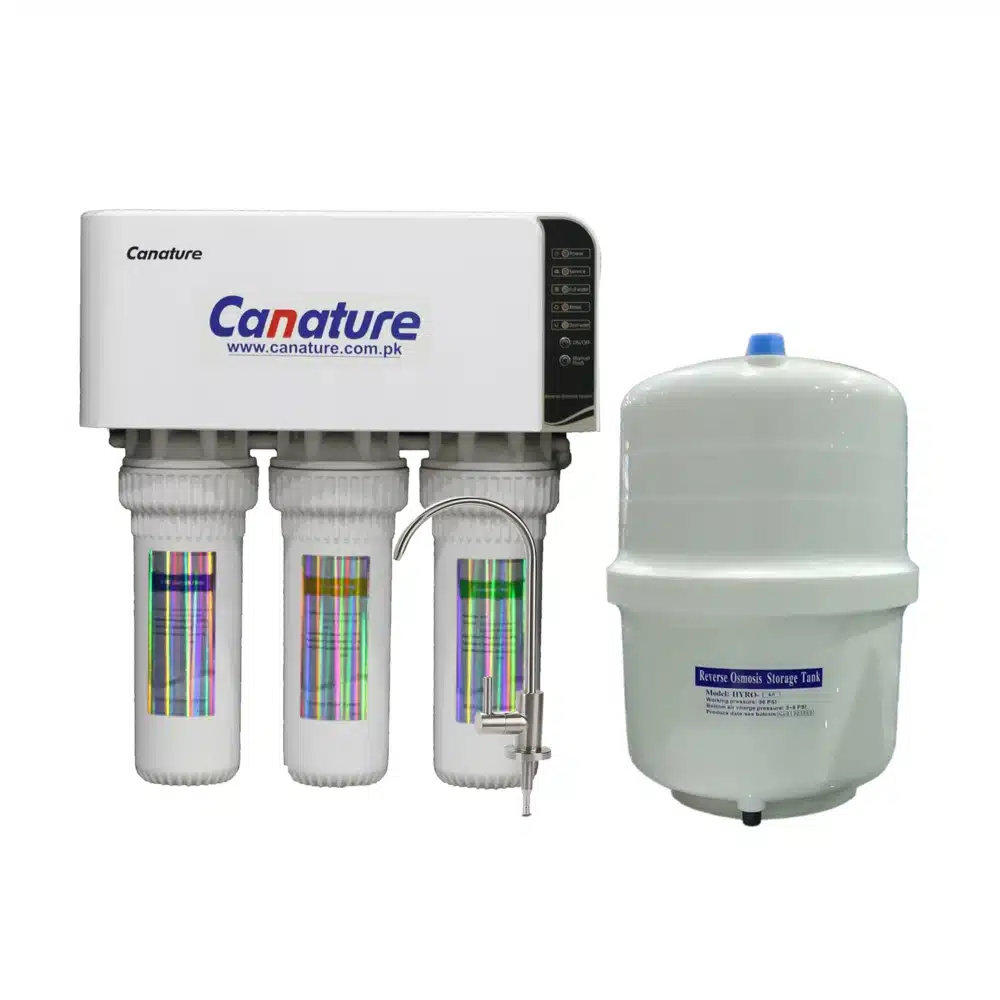
Reverse Osmosis Systems Work: A Complete Guide for Pakistani Homes
In case you are living in Pakistan and you may be asking yourself the questions of how to obtain the real clean drinking water at home, it is important to understand Reverse Osmosis Systems Work. The systems have emerged as one of the most used systems to eliminate impurities, boost taste and safe water among the urban population (people of Lahore, Karachi, and Islamabad). In this guide, we will discuss how such Reverse Osmosis Systems Work, what they eliminate and why they may be the best solution to your home.
Reverse Osmosis Systems Work
Reverse osmosis (RO) is a method of purifying water, where water is forced to flow through a specific semi-permeable membrane that separates the contaminating elements. Whereas normal filters are used to block dirt, RO in fact isolates water molecules and other harmful elements, flowing clean water to your tap and washing the leftovers as wastewater.
In order to comprehend reverse osmosis, it would be appropriate to know about osmosis initially. Osmosis is a natural phenomenon whereby water is transported through a membrane in an area with low solutes to one with high solutes. RO works against this natural direction by creating pressure which causes water in a high-solute region to move to a low-solute region and abandon impurities.
How Reverse Osmosis Systems Work?
RO systems involve a set of stages and filters that make water healthy and delicious. Here’s a simple breakdown:
Pre-Filtration– Water is initially filtered in sediment and carbon filters to get rid of dirt, sand, chlorine, and big particle. This shields the RO membrane and enhances the taste of water.
RO Membrane Filtration– The water is then pumped through the RO membrane, which filters the water by removing the dissolved solids such as salts, fluoride, arsenic, PFAS and heavy metals. It is very pure as only water molecules go through.
Wastewater Disposal – The concentrated pollutants which are not filtered through the membrane are washed away as brine. The modern systems are more efficient but on average, 3-4 gallons of wastewater are produced to 1 gallon of purified water.
Post-Filtration and Storage – Water is then filtered one last time before it gets to your faucet by utilizing a final carbon filter to taste and eliminate any left over odor. It is thus stored in a tank to be used immediately.
This is the stage process that makes the reverse osmosis system effective even in regions that have high contamination levels.
What Do RO Systems Remove?
The harmful contaminants that are removed by the use of RO systems include:
- Fluoride, arsenic and hard metal.
- Other chemicals and chlorine.
- PFAS and VOCs
- Sediment, microplastics and pesticides.
RO however does not fully kill bacteria and viruses, hence in case your water supply is not treated, it is advisable to use UV filter.
Advantages of Reverse Osmosis Systems.
There are several benefits associated with using RO system at home:
Cleaner water – Filtrates a maximum of 99% of toxic chemicals and dissolved salts.
Greater flavor and smell – Carbon filters improve the taste and remove the odor of the water.
Cost savings – Saves money on bottled water and minimizes the plastic waste.
Environmental – Minimized use of plastic bottles is in favour of sustainability.
These systems bring significant difference in taste and safety to Pakistani families, in particular, the urban ones.
Is it true that RO Systems are never necessary?
RO system might not be very necessary in case your tap water is already safe. Nonetheless, in such cities as Lahore, where the hardness of the water and the chemical pollutions may be severe, reverse osmosis systems may be implemented as an additional security measure. They are also useful when you have a water softener as RO decreases the sodium and other minerals that are added.
Long-Lasting RO Systems Maintenance.
In order to maintain your RO system in good operation:
- Change sediment and carbon filters after every 6-12 months.
- Change RO membrane within 2-3 years, depending on the water quality.
- Measure the pressure in the storage tank (7-8 psi).
- A TDS meter can be used to check water quality so that you can replace the filters.
A good RO system is capable of delivering safe drinking water over the years with proper maintenance. Nonetheless, in such cities as Lahore, where the hardness of the water and the chemical pollutions may be severe, reverse osmosis systems may be implemented as an additional security measure. They are also useful when you have a water softener as RO decreases the sodium and other minerals that are added.
Selecting the Best RO System to your house.
In choosing a system:
- Water source City water vs. well water.
- Water pressure – a booster pump should be used if the pressure is less than 40 psi.
- Capacity of the system – Test gallons per day (GPD) of your family.
- Stages and filters – Stages are more economical to filter better, the more stages the better.
Under-sink RO systems are popular among residential use with whole-house systems in large houses with more than one water point.
Final Thoughts
The fact that reverse osmosis systems are effective will allow you to make a better decision about the purification of water at home. Water, which in Pakistan may differ in quality, is guaranteed of being clean, safe and of good taste with an RO system that provides you and your family with clean, safe and taste water. Not only does it increase health but it also lowers plastic waste and is less costly in the long term.


No comment